
Step-by-step Guide to Configuring Low-latency Video Conferencing Guide
Picture this. You are right in the middle of closing a high-stakes client deal. You open your mouth to deliver the final pitch, and—freeze. Your face contorts into a cursed, pixelated grimace on their end. Three seconds later, your audio stutters out like a dying robot. We’ve all been there. It is infuriating, it is deeply unprofessional, and honestly? It usually comes down to terrible configuration, not just a bad internet plan. I’ve spent the last decade auditing remote communication setups for enterprise clients, and here’s the ugly truth: most default settings on modern video tools are built for the lowest common denominator. If you want zero lag, you have to rip those defaults apart and rebuild them. Let’s fix that right now.

- • Diagnosing the Latency Monster (Where Is the Bottleneck?)
- • Step 1: Hardwire Your Infrastructure and Prioritize QoS
- • Step 2: Optimize Codec Selection and Video Bitrates
- • Step 3: Strip Down Your OS and Application Environment
- ↳ Does a faster internet plan automatically fix video latency?
- ↳ Should I use Wi-Fi 6 or Wi-Fi 7 for video calls?
- ↳ Why does my video lag only after being on a call for 20 minutes?
- ↳ Is UDP always better than TCP for video conferencing?
Key Takeaways & Quick Overview
AI Verified
- ✔Image_data: [ {“id”: 1, “query”: “frustrated professional looking at buffering video call screen”, “context”: “a close-up shot of a stressed remote worker staring at a frozen video conferencing screen on a laptop.
- ✔“}, {“id”: 2, “query”: “network switch ethernet cables server rack flashing lights”, “context”: “a detailed shot of network hardware and ethernet connections used to stabilize high-speed data transmission.
- ✔“} ] –> step-by-step guide to configuring low-latency video conferencing guide picture this.
- ✔You are right in the middle of closing a high-stakes client deal.
Diagnosing the Latency Monster (Where Is the Bottleneck?)
Before you start tweaking bitrates and switching codecs, you need to know where your packets are actually bleeding. Latency isn’t just one monolithic problem. It is a toxic cocktail of serialization delay, propagation delay, queuing delay, and processing delay. Most people blame their Internet Service Provider immediately. Sometimes they are right. More often, their local Wi-Fi router is drowning in background noise, competing with smart bulbs, tablets, and a neighbor’s rogue network.
I always tell my engineering teams to start with a hardline diagnostic. Run a traceroute. Look at your jitter, not just your raw download speed. You can have a gigabit connection and still suffer from horrific jitter spikes that ruin real-time communication. According to the FCC broadband speed guidelines, real-time interactive apps demand far more stability than simple video streaming. While Netflix can aggressively buffer ahead to hide network hiccups, your live video call has zero margin for error. Every millisecond counts.
To really understand how modern browsers handle this traffic under the hood, check out the official WebRTC architecture guide. It breaks down how peer-to-peer connections bypass heavy server relays to slash precious milliseconds off your transmission time.
Step 1: Hardwire Your Infrastructure and Prioritize QoS
Drop the Wi-Fi. Just drop it. I don’t care how expensive your mesh router system is, wireless signals are inherently prone to interference. Electromagnetic noise, walls, and distance will always introduce micro-drops in packet delivery. Grab a Cat6 ethernet cable and plug directly into your router.
Next up: Quality of Service (QoS) rules in your router’s firmware. If your kid is downloading a 50GB game update in the other room, your video call *will* suffer unless you tell your router who is boss. Log into your router admin panel and find the QoS or WMM settings. Create a priority rule for your computer’s local IP address, weighting real-time UDP traffic (which video conferencing relies on) above bulk file downloads.
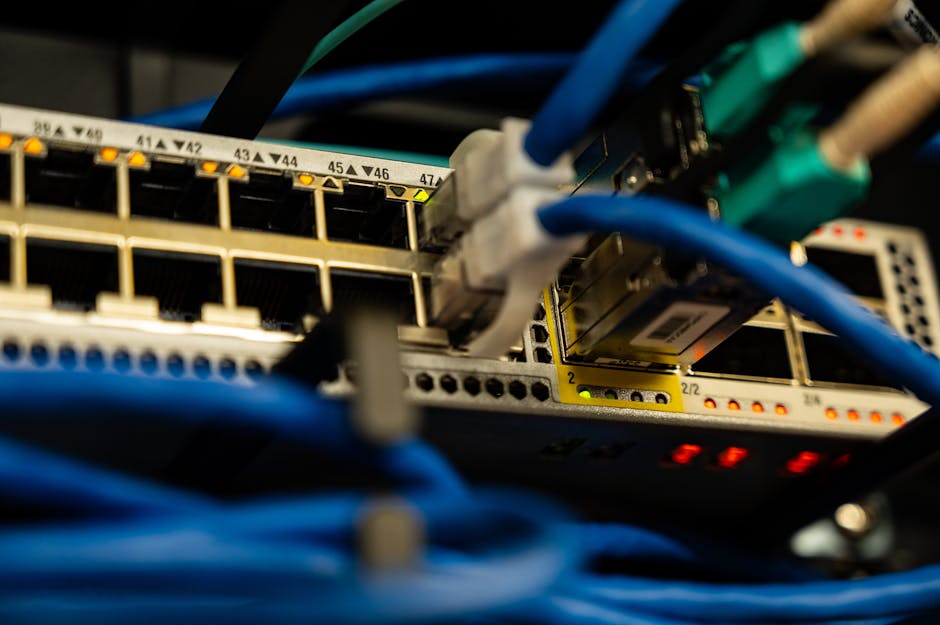
If you’re dealing with persistent packet drops, you’ll want to review industry-standard Packet loss mitigation strategies to understand how buffering and queuing algorithms can be tuned for zero-lag performance.
Step 2: Optimize Codec Selection and Video Bitrates
Here is a classic mistake: users crank their video conferencing software to 1080p or even 4K because “higher quality is better.” Stop doing that. High resolution demands massive bandwidth, which directly inflates packet size and serialization delay. For true low-latency performance, stability always trumps pixel density.
Drop your capture resolution to 720p at 30 frames per second. Trust me, nobody cares about the individual pores on your nose; they care that your voice and mouth movements are synced. Modern video platforms use advanced codecs like VP9, AV1, or H.264. If your software lets you force the hardware acceleration settings, enable them. This offloads the heavy lifting from your CPU to your GPU, preventing frame drops caused by system throttling.
- Cap your maximum bitrate: Set a ceiling around 1.5 Mbps to 2.5 Mbps for 720p streams to prevent sudden buffer bloat.
- Disable unnecessary video enhancements: Background blur, AI face-tracking, and real-time filters consume massive CPU cycles that should be dedicated to encoding.
- Prioritize audio integrity: If you must sacrifice bandwidth, take it from the video feed, not the audio. People will tolerate a slightly fuzzy image; they will hang up on broken, robotic audio.
Step 3: Strip Down Your OS and Application Environment
Your computer is probably running a dozen background apps right now, all sipping memory and CPU cycles. When you launch a video call, your operating system juggles thread priorities. If a cloud sync app or antivirus scan decides to kick in mid-meeting, your video frames start dropping like flies.
Close every single background application before jumping on a critical low-latency call. Better yet, create a dedicated user profile on your machine specifically stripped of bloatware, startup apps, and notification daemons. In your conferencing app settings, disable automatic hardware switching and force the application to use your discrete graphics card if you’re on a multi-GPU laptop.
Frequently Asked Questions
Does a faster internet plan automatically fix video latency?
No. Raw bandwidth (download/upload speed) is just the width of the pipe. Latency is the speed at which data travels through that pipe. You can have a 1,000 Mbps connection with terrible routing or Wi-Fi interference that causes massive lag. Focus on jitter and ping reduction instead.
Should I use Wi-Fi 6 or Wi-Fi 7 for video calls?
While newer Wi-Fi standards feature improved packet scheduling and lower latency than older protocols, they still cannot beat a physical copper ethernet connection. If absolute zero-latency is your goal, always hardwire.
Why does my video lag only after being on a call for 20 minutes?
This is usually caused by thermal throttling or memory leaks. As your CPU or GPU overheats, the system automatically slows down its clock speed to cool itself down, severely impacting real-time video encoding. Ensure your workspace is well-ventilated and your laptop fans are clear of dust.
Is UDP always better than TCP for video conferencing?
Yes. Video conferencing relies on real-time delivery where old data is useless. UDP drops lost packets and keeps moving forward, maintaining low latency. TCP pauses transmission to request retransmission of lost packets, which creates stuttering and freezing in live video.